

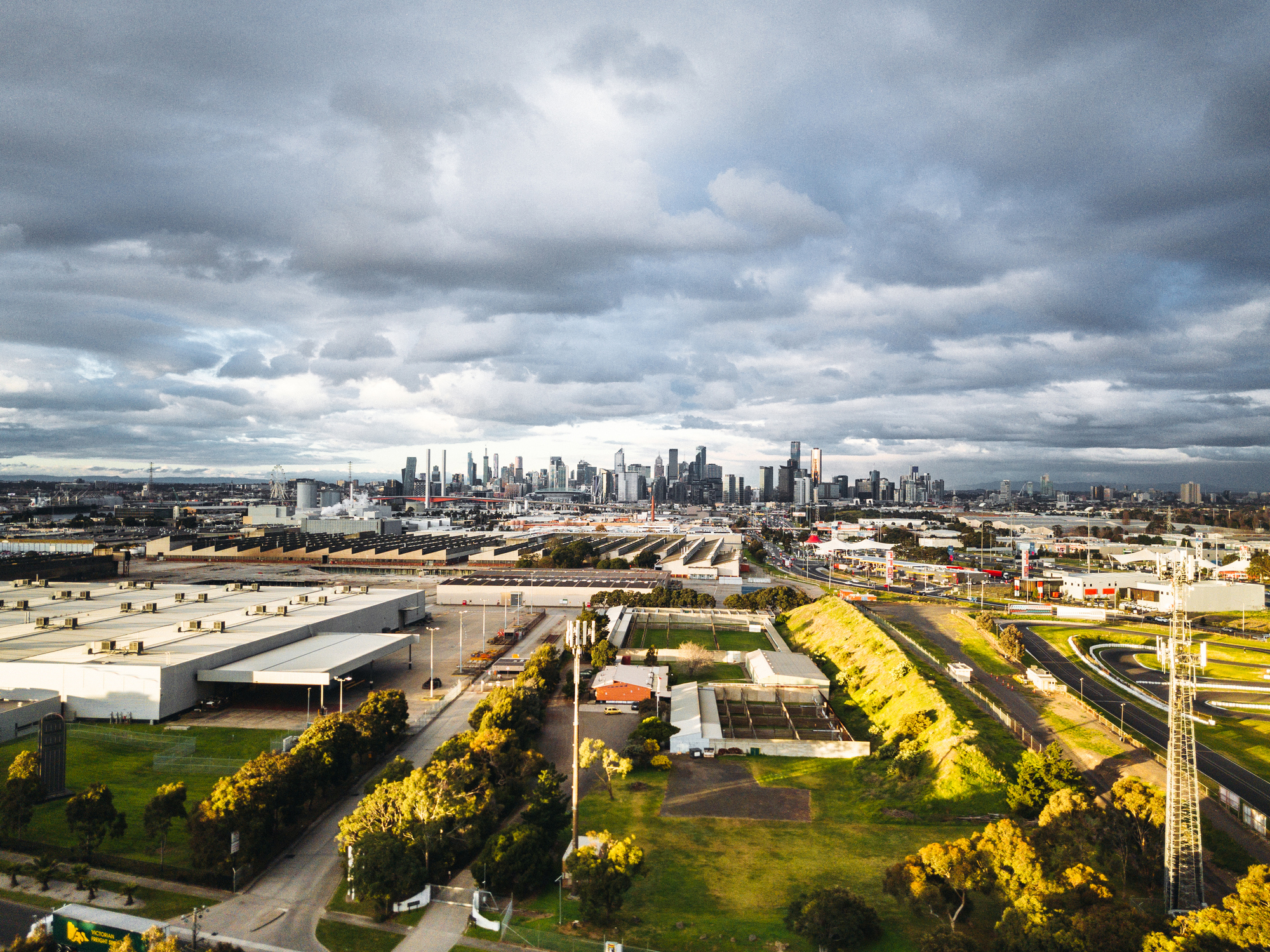
For something most of us never see, data centres are becoming surprisingly difficult to ignore.
They are the warehouses behind the digital economy: vast buildings filled with servers, networking equipment and storage systems that keep our cloud applications, websites, phone systems, streaming services and increasingly, artificial intelligence, running.
As a Melbourne-based business, we’re seeing our city become a significant part of this story.
For businesses, that’s generally good news. More local infrastructure means better access to cloud services, improved connectivity, greater resilience and the ability to keep data closer to Australian users.
But there’s another side to the story.
Data centres require enormous amounts of electricity, cooling, land and network infrastructure. As Melbourne positions itself to take advantage of the global AI boom, questions are increasingly being asked about whether our power, water and planning systems can keep pace.
So, are data centres a brilliant investment in Australia’s digital future or a very large headache waiting to happen?
As with any complex technological change, the answer lies somewhere in the middle.
Why Melbourne wants more data centres
Let’s start with the positives.
Australia’s businesses are becoming increasingly dependent on cloud computing. Microsoft 365, cloud accounting, CRM platforms, video conferencing, cybersecurity, cloud phone systems and AI tools all rely on physical infrastructure somewhere.
Having that infrastructure in Australia provides some significant advantages.
For starters, there’s performance.
The closer your data and applications are to your users, the less distance information has to travel. That can mean lower latency and a better experience for applications where milliseconds matter.
There’s also resilience.
Modern data centres are designed with multiple power supplies, network connections, cooling systems and backup infrastructure. For a business, that can be considerably more reliable than keeping a server under a desk or in a communications cupboard and hoping nobody accidentally unplugs it.
Important to the security question, then there’s data sovereignty.
Australian organisations in regulated industries may have legitimate reasons for wanting their data and systems hosted domestically. Local data centres can help businesses meet Australian privacy, security and regulatory requirements while reducing reliance on overseas infrastructure.
And perhaps most importantly, Melbourne needs the infrastructure if Australia wants to participate meaningfully in the AI economy.
AI is changing the equation
This is where things get interesting.
The data centre of ten years ago and the data centre being designed for AI are not necessarily the same thing.
Traditional workloads might involve relatively predictable computing requirements: storing files, running applications, processing transactions and hosting websites.
AI is much more demanding.
Training and operating sophisticated AI models requires huge amounts of computing power, often using specialised GPUs running continuously. More computing means more electricity. More electricity means more heat. More heat means more sophisticated cooling.
Suddenly, the humble data centre has become part of the global AI arms race. And just like arms races before this one (think the space race and nuclear weapons) there are multiple players vying for top position and dominance. This means investment, massive investment.
Countries around the world are investing billions in AI infrastructure because they don’t want to be left behind. Australia faces the same choice: build the infrastructure required to participate, or increasingly rely on computing capacity located overseas.
From a technology perspective, there is a compelling argument for investment.
But of course, there’s a catch.
Melbourne’s water problem
Cooling is one of the biggest challenges facing large data centres.
And this is where Melbourne’s current debate becomes particularly interesting.
In 2025, documents obtained by the ABC showed that Greater Western Water was assessing applications from 19 proposed data centres requesting almost 20 gigalitres of water a year.
To put this number into perspective, that’s roughly equivalent to the amount of water used by 330,000 Melburnians in a year.
Those numbers understandably attracted attention.
However, it’s important not to conclude that every data centre will consume enormous quantities of drinking water.
Water use varies significantly depending on the cooling technology used, the size of the facility, weather conditions and whether recycled water is available.
That’s actually one of the more encouraging developments.
Data centre operators are increasingly looking at air cooling, closed-loop systems, water recycling and alternative sources of water. In Melbourne, there are already examples of data centre infrastructure being connected to recycled water rather than relying entirely on potable supplies.
The lesson is fairly simple: the technology matters.
If Melbourne is going to build data centres, water efficiency needs to be part of the design from day one – not something considered after the concrete has been poured.
And then there’s electricity
If water is one side of the equation, electricity is the other.
Data centres operate 24/7. They cannot simply shut down because electricity demand is high. And AI is increasing the amount of power required.
Data centres are projected to scale from consuming roughly 2% of Australia’s total grid demand today to up to 10%–12% of the National Electricity Market (NEM) by 2050, according to the Australian Energy Market Operator (AEMO). This figure aligns with regional forecasts showing data centres consuming up to 19% of Victoria’s entire grid-supplied electricity by 2050.
This is a significant increase and the projection raises some difficult questions.
Where does the electricity come from?
Can the grid handle the additional demand?
Will new renewable generation and transmission infrastructure keep pace?
And, perhaps most importantly, who pays for the infrastructure required to connect these enormous new loads?
These aren’t purely technology questions anymore. They’re infrastructure and public policy questions.
Why are people protesting?
It’s not surprising that some communities aren’t particularly enthusiastic about having a giant server warehouse appear next door.
Across Melbourne, community concerns have included noise, visual impact, power infrastructure, environmental impacts, land use and the amount of consultation taking place before projects are approved.
The proposed AI hub in Melbourne’s outer west has become a particularly visible example. Thousands of people have signed petitions calling for greater scrutiny of the development, which some have colourfully named “Mordor”.
Residents near existing and proposed facilities have also raised concerns about large electricity infrastructure appearing close to homes and the constant hum associated with cooling equipment.
And this is where the industry needs to listen.
The fact that data centres are important doesn’t mean every proposed location is automatically appropriate. Nor should communities be expected to accept infrastructure on the basis that “AI is the future”.
Both sides need to be considered if AI is to become a sustainable part of our work and personal technological lives.
As we know, technology doesn’t stand still
There’s another challenge that doesn’t get quite as much attention: data centres have to keep up with technology.
The infrastructure being designed today needs to remain useful for years – or potentially decades. That’s difficult when AI hardware, processing architectures, cooling technology and networking standards are evolving so quickly.
A facility designed around today’s computing requirements may look very different five years from now.
Higher-density servers require different cooling. AI workloads require higher-speed networking. Cloud applications require increasingly resilient connectivity. And businesses increasingly expect their applications to be available everywhere, all the time.
For telecommunications providers like Comvergence, this is particularly important.
A data centre can have the best servers in the world, but if the network connecting it to customers is unreliable, the customer experience will still be poor.
The telecommunications piece of the puzzle
Businesses don’t experience a data centre directly – they experience it through their internet connection.
Your Microsoft 365 connection, cloud phone system, CRM, video call or AI application all rely on a chain of infrastructure working together.
That means business-grade internet, diverse network paths, resilient routers, managed firewalls and reliable connectivity into cloud and data centre environments are becoming increasingly important.
The data centre might be hundreds of kilometres away. But to the person sitting at their desk, it’s only as good as the connection between the two.
Are data centres good or bad?
As we’ve explored, this is too simple a distinction for something so complex.
Melbourne has a genuine opportunity to attract investment, create skilled jobs, strengthen its digital economy and build the infrastructure needed to participate in the next generation of cloud computing and AI. But growth shouldn’t mean ignoring water, energy, environmental or community concerns.
From a technology perspective, the data centre boom is exciting. From an infrastructure and public policy perspective, it’s challenging.
For us as telecommunications experts, the data centre revolution is a timely reminder that the digital economy isn’t just a digital product or service. Behind every cloud application, AI model and call is a very physical world of fibre, power, cooling, servers, buildings and networks.
The trick is making sure we have enough of all of them without using more resources than we can afford.
If you’re keen to discuss your network challenges or upgrade needs, we’re always here to help. Contact the friendly Comvergence team to discuss your ideal network connection today.